
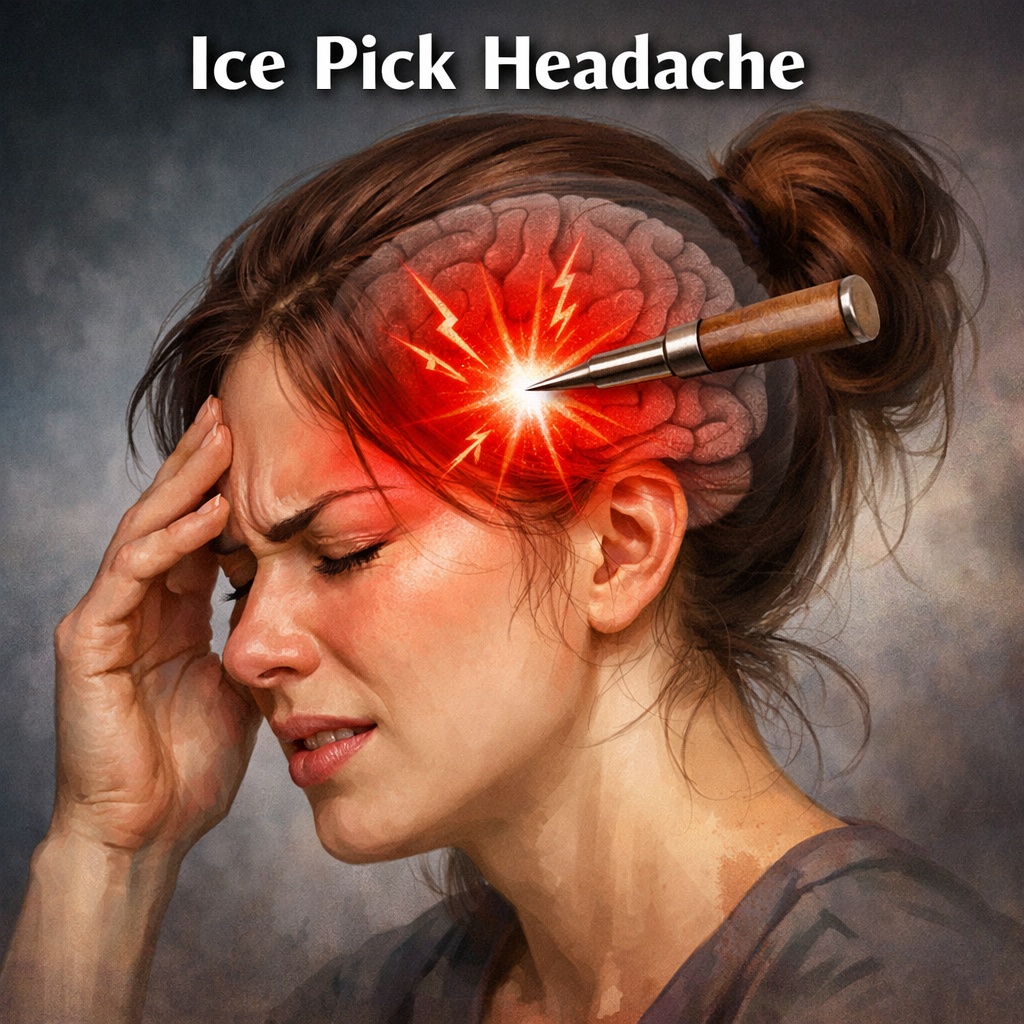
Introduction to Ice Pick Headaches
Ice pick headaches are a type of severe headache that can catch individuals off guard with their sudden, sharp jabs of pain. Unlike other headaches that may build gradually or linger, these headaches strike quickly and intensely, often described as feeling like a stabbing or piercing sensation in the head. Their unpredictable nature and brevity can make them both confusing and unsettling for those who experience them.
Although they are not as commonly discussed as migraines or tension headaches, ice pick headaches are recognized as a distinct condition. Technically, the current diagnostic name for these head pain attacks according to the International Headache Society are “primary stabbing headaches.” The diagnostic name has evolved over the years, previously called “stabs and jabs headache”, “jabs and jolts headache”, and ophthalmodynia periodica, among other names.
Ice pick headaches are typically short in duration, but their severity can cause concern, particularly for those who are unfamiliar with this type of pain. Questions often arise, such as whether these headaches are linked to more serious conditions like aneurysms or other neurological issues.
The good news is that this type of headache pain is fairly common and most often benign, meaning they are not associated with dangerous underlying causes in most cases. However, they still always require testing and a discussion with your doctor.
Understanding why they occur can be challenging, as their triggers and mechanisms are not entirely clear. Factors like nerve irritation, brain activity, migraine or other headache history, and other individual predispositions may play a role in their development.
This guide is designed to offer an in-depth look at the causes, symptoms, and treatment options available for ice pick headaches, while addressing common concerns and misconceptions. Our goal is to provide clear, evidence-based information to help readers navigate ice-pick headaches with confidence.
Recognizing Symptoms of Ice Pick Headaches
Ice pick headaches are known for their sudden and piercing nature, which sets them apart from other types of headaches. The majority of primary stabbing headache attacks last 3 seconds or less, and rarely up to 120 seconds. The intensity of the pain is often described as sharp and severe, occurring quickly and of short duration, catching individuals off guard without warning. These headaches can affect any part of the head including the front of the head, temporal area, back of the head, or side of the head. They do not always strike the same location each time, and only about 1/3rd of people experience the pain in the same location every time.
Episodes of ice pick headaches may occur sporadically, with some individuals experiencing them only once, while others may have multiple attacks in a single day.
Ice pick headaches must also be differentiated from other headache disorders which may have overlapping symptoms or characteristics such as temporal arteritis, occipital neuralgia, trigeminal neuralgia, or the trigeminal autonomic cephalalgias (TAC syndromes) including SUNCT/SUNA and cluster headache because these require completely different types of treatments. Working with a healthcare provider ensures proper assessment and access to effective treatments tailored to the dissection of crucial differentiating details and characteristics.
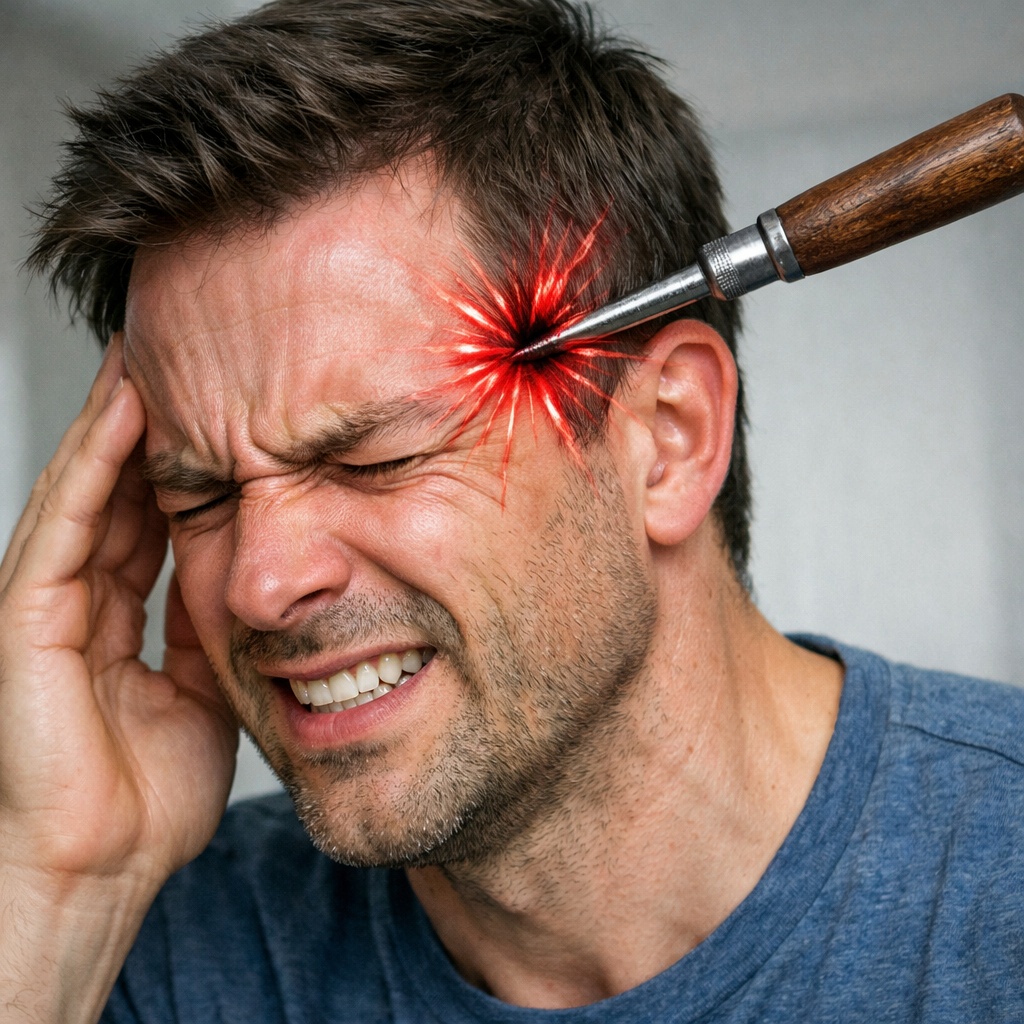
Exploring Causes of Ice Pick Headaches
There are different theories as to the cause of ice pick headaches. The role of irritated isolated branches of the trigeminal nerves and upper cervical and occipital nerves (depending on location), is often considered a possible cause of the pain. These nerves are responsible for transmitting pain in the head, scalp, and face. They travel through the thick fibrous tissue of the scalp and if they get pulled or twisted in localized areas as they traverse this layer, they may become irritated. This may explain the sudden and intense nature of these head pains in a localized focal area of the head. Other theories suggest ice pick headaches may be caused by overactive pain transmitting nerve cells within the brain firing off pain signals erroneously.
Other potential factors contributing to ice pick headaches include having migraine headaches (often seen in patients during migraine attacks or in between migraines), other headache disorders, localized inflammation (including following an injury to part of the head or viral infection), and other temporary electrical disruptions in the normal sensory signals of the nerves. While the exact mechanisms remain uncertain and likely vary, researchers suggest that these headaches might be connected to the brain’s pain regulation system reacting abnormally.
It is also essential to differentiate between primary headaches and secondary icepick headaches. Primary ice pick headaches occur independently and are not associated with other medical conditions. In contrast, secondary ice pick headaches may arise as a symptom of an underlying issue, such as an infection, injury, aneurysm, brain tumor, or other neurological conditions (although these are all rare cases). Understanding whether a headache is primary or secondary is a critical step in determining appropriate management and care.
Ice Pick Headache Treatment
Indomethacin, a nonsteroidal anti-inflammatory drug (NSAID), is often a reliable treatment option if the attacks are daily or of high frequency. Research shows that Indomethacin provides partial or complete relief for approximately 2/3rds of individuals with ice pick headaches, but up to 35% of patients may not respond. Like any NSAID, it is preferred to not use it on a long term frequent basis though since NSAIDs can cause side effects including kidney and liver issues if taken in excess. Cyclooxygenase-2 (COX-2) inhibitors are safer on the gastrointestinal tract long term and some can receive benefit with these.
For patients who do not respond well to indomethacin, cannot tolerate it due to side effects, have a medical contraindication, or need to be on a longer term continuous solution, alternative prescription medications targeting nerve related pain are used. The most common first line options for longer term control are gabapentin or amitriptyline, although duloxetine and pregabalin are additional considerations. Some report benefit with bedtime melatonin, a hormone known for its role in regulating sleep-wake cycles.
In addition to pharmaceutical interventions, healthcare providers may recommend other strategies to help alleviate or manage symptoms. These can include identifying potential triggers (such as touching or putting pressure on the area) or using non-drug therapies that complement traditional treatments. External hand warming has been reported to provide relief in some. Maintaining a consistent sleep routine, staying hydrated, and incorporating regular exercise can potentially reduce the frequency or intensity of episodes. Stress management techniques, such as meditation, relaxation exercises, or yoga, may also be helpful in managing overall well-being.
However, since the effectiveness of these alternatives can vary, it’s essential to work closely with a medical professional to determine the best approach based on individual needs and responses.
What Tests Should Be Done for Ice Pick Headache?
Testing for ice pick headaches should include a brain MRI and MRA to look at both the brain and the blood vessels in the brain. If an MRI is not possible, then a CTA of the brain should be considered for the same reasons. Routine blood tests including an ESR and CRP to screen for inflammation are commonly performed. Other testing may vary, depending on your other medical history and examination with your doctor.
When to Seek Medical Advice for Ice Pick Headache
While ice pick headaches are usually not associated with serious medical conditions, they still need to be evaluated and discussed with your doctor. If you’ve already seen your doctor for them, but notice they are increasing in frequency, lasting longer than a few seconds, or changing in intensity, it is advised to consult a healthcare provider. These changes may indicate a need for further investigation to rule out other potential causes, review your medical history, and perform a physical exam.
In particular, it’s important to seek immediate medical attention if ice pick headaches are accompanied by additional symptoms such as blurred vision, difficulty speaking, numbness, weakness, or other neurological symptoms as these could signal an underlying neurological issue. If you experience headaches after a head injury or in conjunction with symptoms like fever or a stiff neck, you should also see a healthcare professional emergently. These could point to secondary ice pick headaches linked to infections or another underlying condition requiring urgent treatment. If it is your “first or worst” headache, this could also suggest a thunderclap headache and requires emergent medical evaluation.
For individuals who have been previously diagnosed with a different type of headache disorder, such as migraines or cluster headaches, but now experience new or unusual headache patterns, a reevaluation is always recommended. Identifying whether the episodes are related to an existing condition or represent a new type of headache is a critical step in determining the most effective management strategy.
Additionally, if the pain significantly disrupts your daily life or if over-the-counter pain relievers and lifestyle changes fail to provide relief, working with a specialist can help identify tailored treatment options. Ice pick headaches can sometimes be challenging to manage without professional guidance, especially if the episodes are severe or occur frequently.
Remember, while online information is a helpful starting point, it cannot replace a detailed assessment by a medical professional. A proper diagnosis ensures that any concerning symptoms are thoroughly evaluated and that treatment approaches are safe and effective for your specific situation. If you are unsure about the severity or nature of your symptoms, it is always better to err on the side of caution and seek expert advice regarding any painful headaches.
IF YOU HAVE HEADACHE, MIGRAINE, OR FACIAL PAIN AND ARE LOOKING FOR ANSWERS ON ANYTHING RELATED TO IT, A HEADACHE SPECIALIST IS HERE TO HELP, FOR FREE!
FIRST, LET’S DECIDE WHERE TO START:
IF YOU HAVE AN EXISTING HEADACHE, MIGRAINE, OR FACIAL PAIN DIAGNOSIS AND ARE LOOKING FOR THE LATEST INFORMATION, HOT TOPICS, AND TREATMENT TIPS, VISIT OUR FREE BLOG OF HOT TOPICS AND HEADACHE TIPS HERE. THIS IS WHERE I WRITE AND CONDENSE A BROAD VARIETY OF COMMON AND COMPLEX MIGRAINE AND HEADACHE RELATED TOPICS INTO THE IMPORTANT FACTS AND HIGHLIGHTS YOU NEED TO KNOW, ALONG WITH PROVIDING FIRST HAND CLINICAL EXPERIENCE FROM THE PERSPECTIVE OF A HEADACHE SPECIALIST.
IF YOU DON’T HAVE AN EXISTING HEADACHE, MIGRAINE, OR FACIAL PAIN DIAGNOSIS AND ARE LOOKING FOR POSSIBLE TYPES OF HEADACHES OR FACIAL PAINS BASED ON YOUR SYMPTOMS, USE THE FREE HEADACHE AND FACIAL PAIN SYMPTOM CHECKER TOOL DEVELOPED BY A HEADACHE SPECIALIST NEUROLOGIST HERE!
IF YOU HAVE AN EXISTING HEADACHE, MIGRAINE, OR FACIAL PAIN DIAGNOSIS AND ARE LOOKING FOR FURTHER EDUCATION AND SELF-RESEARCH ON YOUR DIAGNOSIS, VISIT OUR FREE EDUCATION CENTER HERE.